



Chase Bethea featured in the Ludic Narrans (Playing Around). Stories of/by/for the Fields of Play and Ludic Narrans (Playing It Straight). Stories of/by/for the Fields of Play
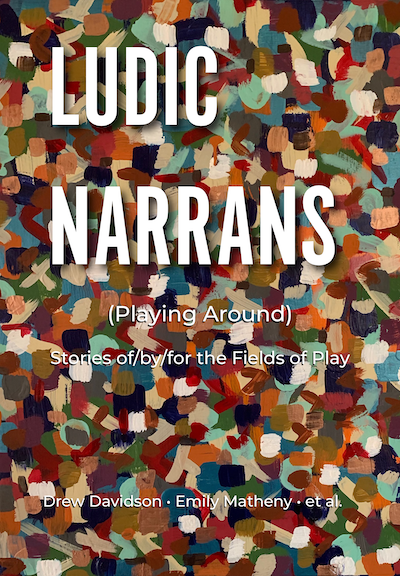
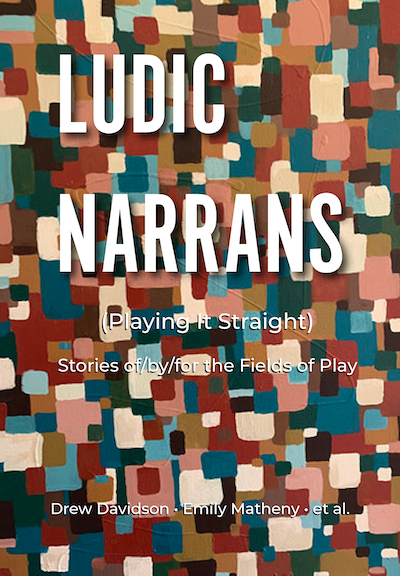
April 3, 2026I am elated to present I am featured in two more books titled, Ludic Narrans (Playing Around). Stories of/by/for the Fields of Play and Ludic Narrans (Playing It Straight). Stories of/by/for the Fields of Play by Drew Davidson, Emily Matheny, et al. https://ludicnarrans.org/
This is my 3rd/4th book debut. (Other features include: The Theory and Practice of Writing Music for Games, Global Histories of Video Game Music Technology)
BIG LOVE to Drew Davidson who was diligent with monthly consistent reports on the book’s progress.
I am very grateful to be included in this unique text publication. My contribution comes from offering my thoughts on what play means to me, what it means to be creative, treating humans like humans and more.
Since 2024, Drew Davidson has been conducting an exploratory qualitative study, Stories of/by/for the Fields of Play. Through questionnaires, in-depth interviews, and community participation, he has been engaging with stories around the fields of play; like games, mixed reality, theatre, sports, music, child psychology, etc. The concept of play is rather broad and diverse; from social studies, to health and enjoyment, to education and learning, to games and technology, and more. As such, this is less a focus on a discipline, and more an exploration of the extensive ideas around play, looking for patterns, commonalities, and differences across various areas amongst educational, industry, professional, foundation, and government groups involved in play. This book is a playful thematic oral history of the stories shared.
The book morphed into two versions with the same content, organized differently. One, “Playing Around,” is a more playful version, splitting and interweaving the sections amongst each other to let them resonate and make for more of a mix of ideas. The other, “Playing it Straight,” is a more scholarly version that keeps distinct sections for ease of reference.
Another way to think of these two versions is as a deck of cards: the latter has all the cards in order, while the former has the cards all shuffled. In both cases, it’s the same content. Drew believes the two versions need each other to more fully manifest the interwoven tapestry of playful stories shared. Together, they accentuate the elusive nature of play and affirm its significance in our lives.
If you want to support and read my perspective, paperback and hardcover copies will be available.